
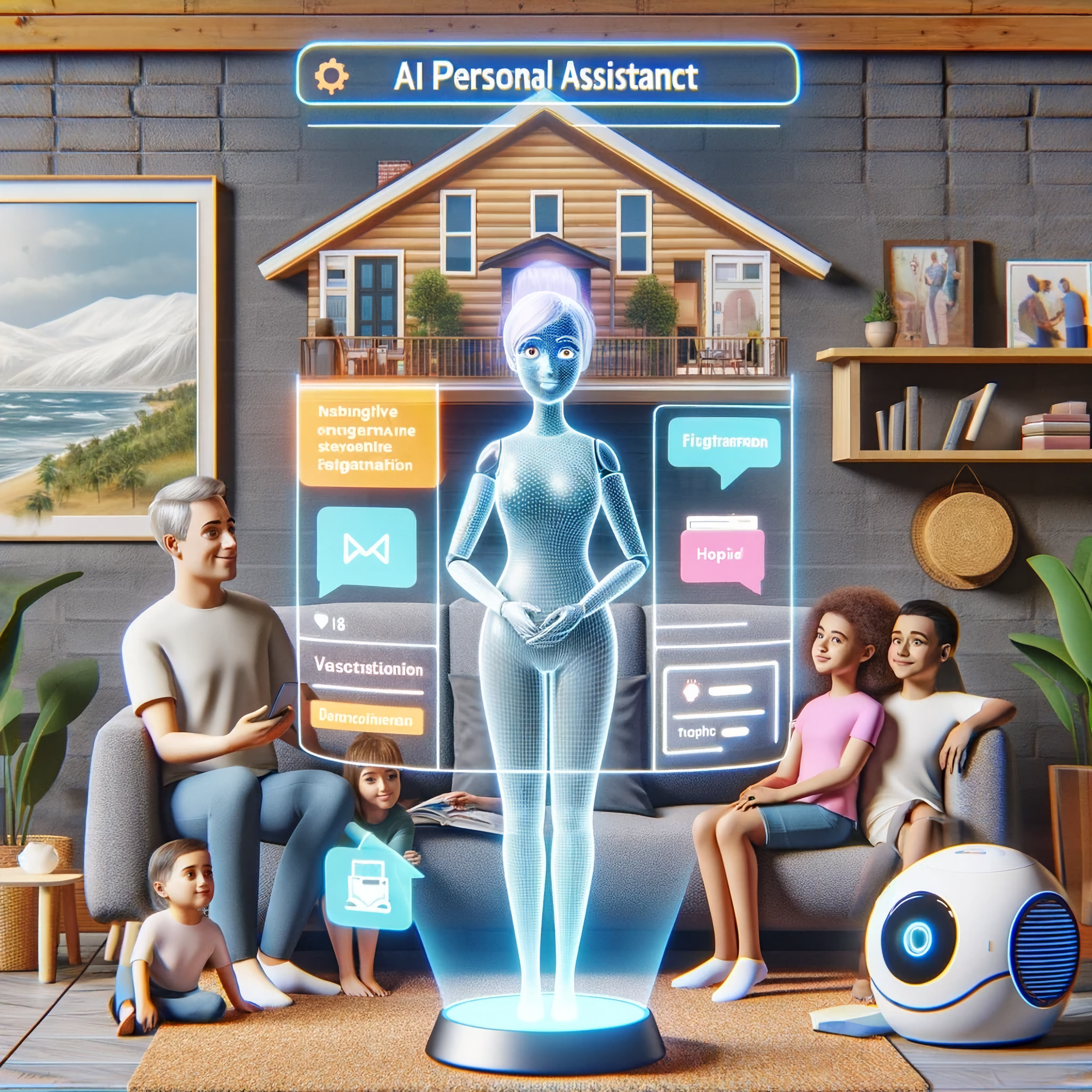
In our rapidly advancing technological age, we’re increasingly seeking out ways to streamline our lives and maximise efficiency. From smart home devices to mobile apps, we’re constantly surrounded by digital tools promising to make our days a little easier. But perhaps no technology personifies this pursuit of convenience and productivity more than AI assistants.
Once a novel concept, AI helpers like Siri, Alexa and others have quickly become entrenched into our daily routines. And now, they’re poised to undergo their next big evolution – becoming stunningly personalised and intelligent partners in our personal and professional lives.
AI Assistants: The Modern-Day Concierge
Let’s face it, we live in an on-demand world where we expect fast, frictionless solutions at our fingertips. And that’s precisely why AI assistants have risen to prominence. With natural language processing capabilities that allow seamless voice and text communication, they can swiftly handle all those little queries and tasks that used to slow us down – setting reminders, looking up facts, controlling smart home devices, and more.
But their utility stretches far beyond just tackling chores. Across industries, AI assistants are becoming indispensable for streamlining workflows, automating processes, and providing data-driven insights to drive better decision-making. Their prowess in quickly processing and analysing large data sets is proving immensely valuable for organisations.
AI assistants have swiftly progressed into hyper-personalized concierges through the utilisation of advanced machine learning algorithms that meticulously analyse individual preferences, habits, and contexts. It is made possible that an AI assistant capable of curating an optimal morning routine tailored to your schedule, offering personalised entertainment suggestions aligned with your distinct tastes, and recommending restaurants that cater to your dietary requirements. The potential for personalized experiences is boundless, showcasing the remarkable evolution of AI technology in delivering bespoke services that cater to individual needs and preferences.
LLM- A Leading-Age Element
Recent advancements in AI, such as Large Language Models (LLMs), have further refined these capabilities, enabling AI assistants to provide even more customised and intuitive services, adapting seamlessly to users’ evolving preferences and requirements. LLMs harness the power of massive neural networks trained on vast textual data, enabling natural language understanding and generation capabilities that fuel conversational AI assistants. By continuously learning from diverse datasets, these language models develop a broad knowledge base and contextual awareness, allowing them to engage in substantive dialogues and provide tailored assistance. The integration of LLMs into personal AI assistants represents a paradigm shift, bringing human-like interaction and intelligent task support to users’ fingertips, reshaping how we collaborate with artificial intelligence.
Solving Real-World Conundrums
As AI technologies advance, these assistants are becoming incredibly adept at tackling complex, real-world problems across multiple domains in intelligent and nuanced ways – problems that have long challenged humanity.
In the medical field, for example, AI language models can now quickly parse through massive datasets of research papers, clinical studies, and patient information to help physicians accurately diagnose rare or unique conditions. Their predictive analytics capabilities can then explore cutting-edge treatment options tailored to each patient. AI is quite literally augmenting human medical expertise.
Similarly, AI-powered virtual tutors and learning companions are transforming education by providing an engaging, personalised experience tailored to each student’s skills and learning style through advanced adaptive learning algorithms. No more one-size-fits-all lesson plans.
Even in creative fields, AI language models are proving to be powerful aids by generating high-quality written content like emails, articles, and marketing copy in human-like natural language – reducing time and effort.
And those are just a few examples. AI assistants are making immense strides across sectors like customer service, e-commerce, finance and more by providing intelligent insights, and recommendations and automating routine tasks.
The Future Frontier
While today’s AI assistants are already remarkably capable, the future promises even more spectacular advancements that will push these technologies into new frontiers of personalization and intuitive intelligence.
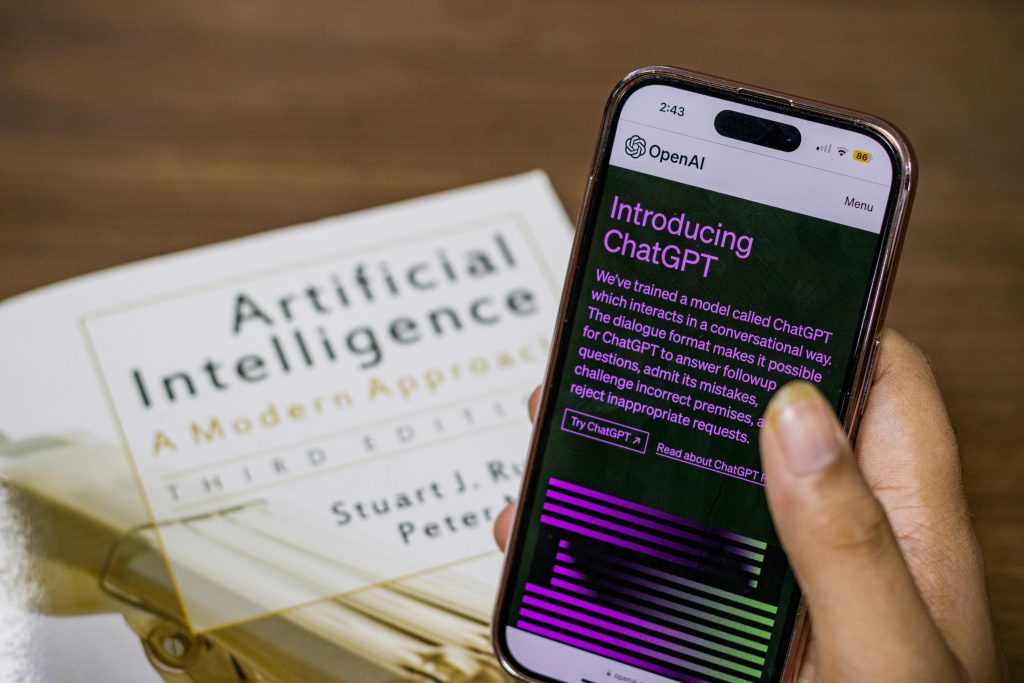
AI assistants have progressed towards multimodal interfaces that seamlessly blend various communication modes like voice, text, visuals, and sensory inputs, enabling more natural and context-aware interactions tailored to individual preferences and situations. An exemplary illustration of this advancement is ChatGPT 4o, showcasing the integration of diverse communication modes for enhanced user experiences. Moreover, ongoing developments aim to further refine these capabilities, focusing on creating more intuitive and personalised interactions that adapt dynamically to users’ needs and contexts.
We will also witness AI language models becoming incredibly sophisticated at understanding the deeper, contextual meaning and nuances behind human communication. This will enable more intelligent, multi-turn dialogue that can explore topics extensively while comprehending the intent behind our words.
On the cutting edge, researchers are making rapid strides towards achieving artificial general intelligence (AGI) – AI systems with generalised problem-solving intelligence that can match human cognition across virtually any task. If realized, AGI could give rise to a new class of superintelligent AI assistants with vast reasoning and problem-solving capabilities that can work alongside humans as powerful cognitive collaborators.
Imperative Privacy and Ethics Principles
As AI capabilities grow more sophisticated and indispensable in our daily lives, robust principles around privacy, security, transparency, and ethical use must be firmly entrenched into their development and deployment.
All major tech companies and AI organizations are fervently enforcing strict protocols around data protection, consent and respecting human agency when creating AI systems. There is a concerted effort to root out biases and ensure these technologies always operate in the best interests of humanity, under human oversight.
After all, an exceedingly personalized AI assistant tailored to our deepest preferences and behaviours could be a double-edged sword without rigorous safeguards.
On the Whole
There is no doubt AI assistants are rapidly evolving into our era’s must-have digital companions and cognitive sidekicks. With each new technological leap, they are becoming exponentially more intuitive, personalised, and efficient at solving problems and simplifying our lives.
More than just smart code and algorithms, AI assistants have the potential to become remarkably human-like partners that can truly understand and collaborate with us – comprehending our values, personalities, and idiosyncratic habits at a profound level.
They will serve as tireless aids across both our personal and professional domains – augmenting our productivity, creativity and decision-making abilities while enriching our daily experiences with custom-tailored solutions and serendipitous insights.
But their influence stretches far beyond just quality-of-life improvements. AI assistants represent a pivotal force that could be the key to unlocking humanity’s long-term progress and flourishing. By exponentially expanding our problem-solving capabilities and acting as catalysts for innovation across fields, these intelligent technologies offer a powerful path towards solving some of our civilization’s most intractable challenges.
As AI assistants continue to evolve in both form and functionality, taking on progressively more advanced tasks and roles, one thing is certain – their impact on our future will be utterly profound and radically reshape our relationship with technology itself. We are quite literally co-creating a new era of human-machine synergy and collaboration. It is an incredibly exciting frontier to explore.