

Step into a world where machines comprehend our language, see what our eyes cannot, and make decisions as if guided by human wisdom. Welcome to the extraordinary realm of Artificial Intelligence (AI), where algorithms wield the power to unlock the secrets of data, revolutionize industries, and shape the future of humanity.
Whether you’re an eager enthusiast or a curious beginner, fasten your seatbelts as we embark on an enthralling adventure into the enigmatic world of Artificial Intelligence. Let us demystify this remarkable technology and unlock the infinite possibilities it holds for our future. Welcome to the dawn of a new era—welcome to the wondrous world of AI!
The introduction of Artificial Intelligence to humans can be traced back to the mid-20th century when the field of AI was first established as an academic discipline. The term “artificial intelligence” itself was coined in 1956 during a conference at Dartmouth College, where researchers and scientists gathered to explore the concept of creating machines that could exhibit intelligent behavior.
Development of AI through ages:
In the 1960s and 1970s, researchers began exploring different approaches to Artificial Intelligence, including machine learning. Machine learning algorithms allowed machines to learn from data and improve their performance over time. The advent of neural networks, inspired by the structure of the human brain, also emerged during this period. However, due to limited computing power and insufficient data, progress in Artificial Intelligence was relatively slow during these early years.
In the 1980s and 1990s,Artificial Intelligence experienced both advancements and setbacks. Expert systems gained attention as a practical application of AI, with systems like MYCIN (for medical diagnosis) and DENDRAL (for chemical analysis) showcasing the potential of AI in specific domains. However, the high expectations surrounding AI during this period led to an “AI winter” in the late 1980s, where funding and interest in AI dwindled due to unmet expectations and overhyped promises.
The late 1990s and early 2000s saw a resurgence of interest in AI, driven by advancements in computing power and the availability of large datasets. Machine learning techniques, such as neural networks and statistical models, began to deliver promising results in areas like speech recognition, computer vision, and natural language processing.
With the proliferation of the internet and the emergence of big data, Artificial Intelligence applications expanded rapidly in the 2010s. Companies like Google, Amazon, Microsoft, and Apple heavily invested in AI research and development, leading to significant breakthroughs in deep learning and the practical deployment of AI in various consumer products and services.
Today, AI has become a ubiquitous part of our lives, powering virtual assistants, recommendation systems, autonomous vehicles, medical diagnosis tools, and much more. The advancements in AI have been driven by the convergence of improved algorithms, vast amounts of data, and increasingly powerful computing resources.
Artificial Intelligence technologies are becoming more accessible to developers and businesses, and their impact on society and industries is expected to grow exponentially in the coming years.
Popularization Of Artificial Intelligence

In the realm of Artificial Intelligence milestones, 1997 saw IBM’s Deep Blue triumph over chess champion Gary Kasparov, heralding the era of machines surpassing human abilities. Dragon Systems introduced speech recognition software for Windows, opening doors to voice-controlled interfaces. Professor Cynthia Breazeal’s creation, Kismet, amazed the world in 2000 with its ability to mimic human emotions through facial expressions.
The release of the first Roomba in 2002 revolutionized household chores with autonomous vacuuming. NASA’s 2003 mission witnessed Spirit and Opportunity rovers autonomously exploring Mars, expanding our understanding of the universe.
The mid-2000s witnessed tech giants like Twitter, Facebook, and Netflix integrating AI algorithms to enhance advertising and user experiences. Microsoft’s 2010 launch of Xbox 360 Kinect brought gesture-based gaming to the mainstream. In 2011, IBM’s Watson won Jeopardy, displaying AI’s prowess in natural language processing.

The same year, Apple’s Siri captivated the world as the first widely embraced virtual assistant, forever changing the way we interact with our devices. These milestones represent significant leaps in AI’s capabilities and their profound impact on our lives.
A Technical Overview Of AI
1. What is Artificial Intelligence?
Artificial Intelligence refers to the development of computer systems capable of performing tasks that typically require human intelligence, such as visual perception, speech recognition, decision-making, and problem-solving. AI systems aim to simulate human cognitive abilities, including learning, reasoning, and adapting to new situations.
2. Machine Learning: A Pillar of AI
Machine Learning (ML) is a subset of AI that focuses on the development of algorithms and models that enable machines to learn and make predictions or decisions without being explicitly programmed. ML algorithms learn from patterns and examples in data to identify underlying relationships and make informed predictions or take appropriate actions.
3. Types of Machine Learning
There are three primary types of Machine Learning:
– Supervised Learning: In supervised learning, models are trained on labeled datasets, where each example has a corresponding target or output value. The algorithm learns to map the input data to the correct output by generalizing from the labeled examples. For instance, given a dataset of labeled images of cats and dogs, a supervised learning algorithm can learn to classify new images correctly.
– Unsupervised Learning: Unsupervised learning deals with unlabeled datasets, where the algorithm aims to discover patterns or structures within the data. Instead of learning from predefined targets, the algorithm learns to identify inherent relationships or groupings. Clustering and dimensionality reduction are common tasks in unsupervised learning.
– Reinforcement Learning: Reinforcement learning involves an agent learning to interact with an environment and make decisions based on feedback from that environment. The agent receives rewards or penalties based on its actions, and its goal is to learn the optimal strategy to maximize cumulative rewards. Reinforcement learning has been successful in applications such as game playing and robotics.
4. Deep Learning: Powering AI Breakthroughs
Deep Learning is a subset of Machine Learning that focuses on artificial neural networks, inspired by the structure and functioning of the human brain. Deep Learning models, known as deep neural networks, consist of multiple layers of interconnected nodes (artificial neurons) that process and transform input data. Deep Learning has been revolutionary in various domains, including computer vision, natural language processing, and speech recognition.
5. Neural Networks and Deep Neural Networks
Neural networks are the foundation of deep learning. They are composed of interconnected layers of artificial neurons, each performing simple mathematical operations on input data. The output of one layer becomes the input of the next, allowing the network to learn increasingly complex representations. Deep neural networks with many layers can learn hierarchical representations of data, enabling them to extract intricate features and patterns.
That now brings us up to date on the most recent AI breakthroughs. We’ve seen a spike in common-use AI technologies like virtual assistants, search engines, and so on.
AI in Healthcare: AI has made significant strides in the healthcare industry. It has been used for medical image analysis, disease diagnosis, drug discovery, personalized medicine, and health monitoring. AI algorithms have shown great potential in improving patient outcomes, reducing medical errors, and enhancing the efficiency of healthcare systems.
Read more about AI in health care – click here
Autonomous Vehicles:
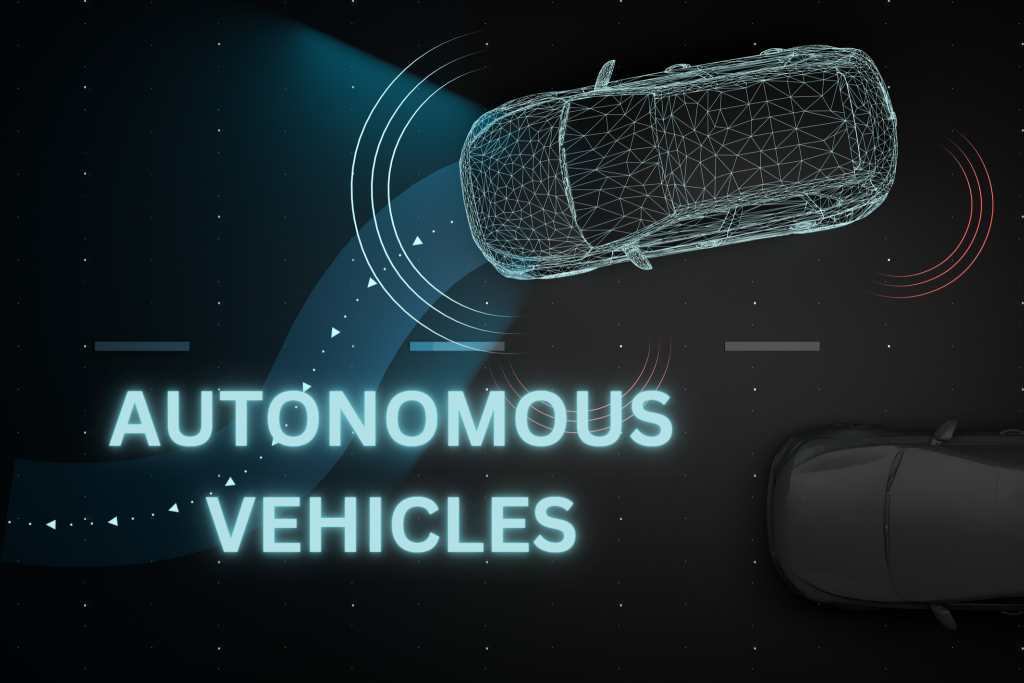
The development of self-driving cars and autonomous vehicles has been a focus of AI research. Companies like Tesla, Waymo, and Uber are working on AI-powered systems that can navigate and make decisions in complex real-world driving scenarios. Autonomous vehicles have the potential to revolutionize transportation, making them safer, more efficient, and more accessible.
Ethical AI and Responsible AI Deployment: With the growing influence of AI, there has been a heightened focus on ethical considerations and responsible deployment. Researchers, policymakers, and industry leaders are actively addressing concerns related to bias, fairness, transparency, and accountability in AI systems. Efforts are being made to ensure that AI technologies are developed and deployed in a manner that aligns with ethical standards and societal values.
In conclusion, the world of Artificial Intelligence (AI) has evolved rapidly in recent years, transforming industries, revolutionizing technology, and shaping our future. From early milestones like Deep Blue defeating a chess champion to the widespread adoption of virtual assistants like Siri, AI has become an integral part of our daily lives.
Breakthroughs in deep learning, reinforcement learning, and natural language processing have propelled AI’s capabilities to new heights, enabling machines to comprehend language, analyze vast amounts of data, and make decisions with human-like wisdom.
With applications spanning healthcare, finance, transportation, and beyond, AI has the power to unlock the secrets of data, enhance human capabilities, and drive innovation. However, as AI continues to advance, ethical considerations and responsible deployment remain paramount to ensure its positive impact on society.
As we embark on this enthralling adventure into the enigmatic world of AI, let us embrace the wondrous possibilities it holds while keeping in mind the importance of responsible and ethical AI development. Welcome to the dawn of a new era—the extraordinary realm of Artificial Intelligence.