
Autonomous driving technology is fast-developing, assuring, and interests prominent minds in all kinds of industries. It is a real game-changer in the automotive, smart cities, transportation, and other related sectors. Software developers, Tier 1 vendors, original equipment manufacturers, and media are all geared up for shaping the future of the automotive industry.
The auto industry is undergoing a significant restructuring where autonomous car companies are progressing as the crucial element in future mobility policies. As a result, the auto or mobility industry is finding ways to channel vast amounts of capital into self-driving car technology.
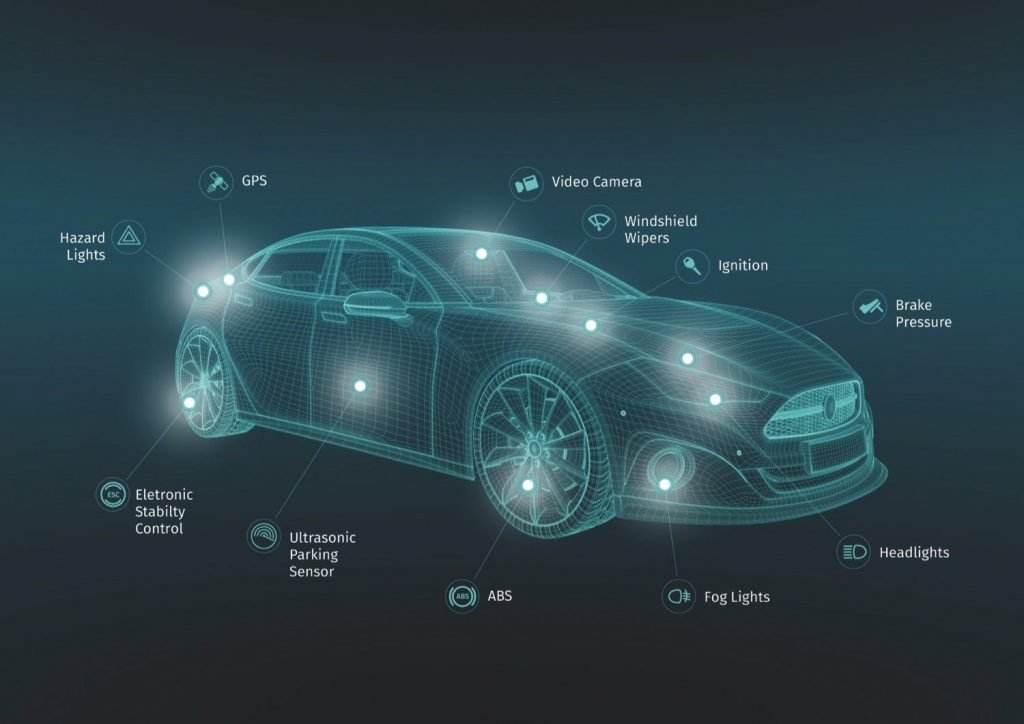
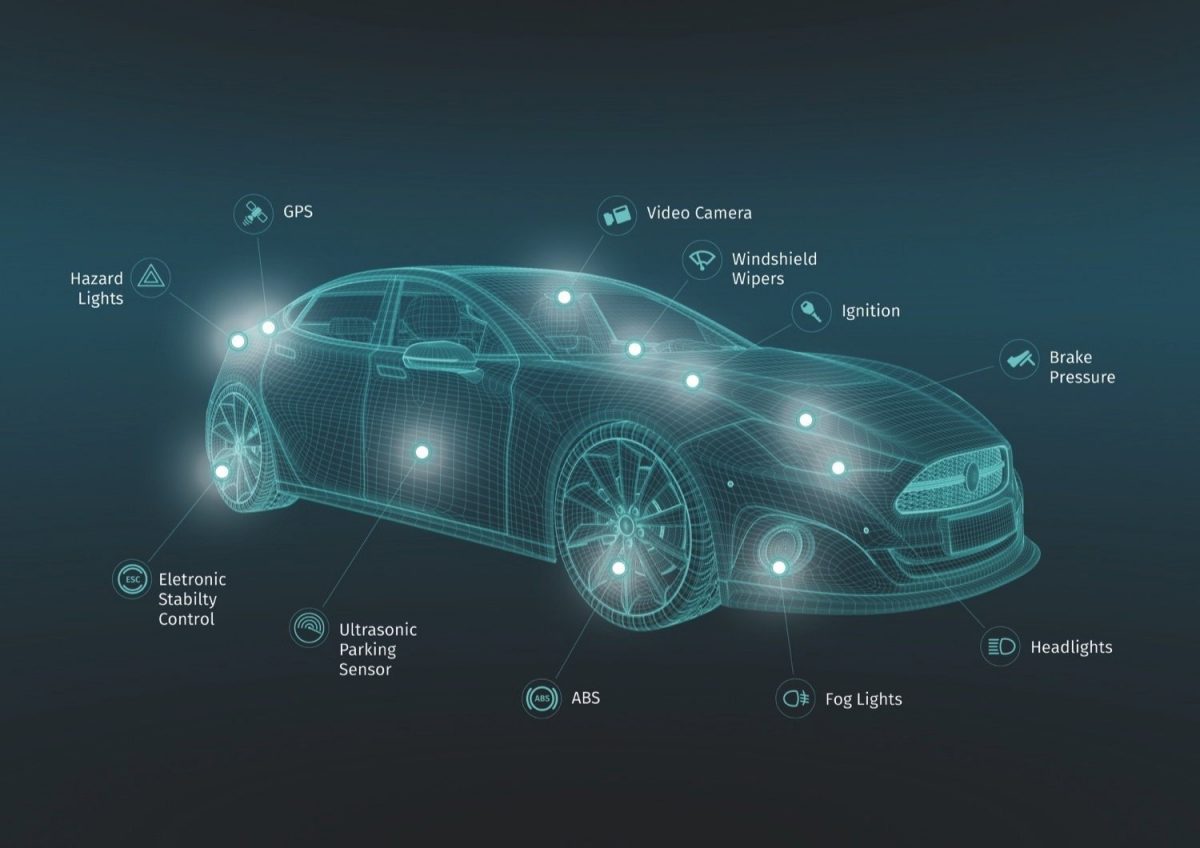
These new cars come equipped with a wide range of instruments (environmental sensors), from temperature gauges and cameras to lasers and sonar.
Each serves its purpose, ultimately working towards the same goal: avoid a collision. It gives the car an awareness of the immediate surroundings, helps with parking assistance, blind-spot detection, and senses the distance between the vehicles. As a result, the AI can stop the car before an incident within rapid processing time to avoid an accident.
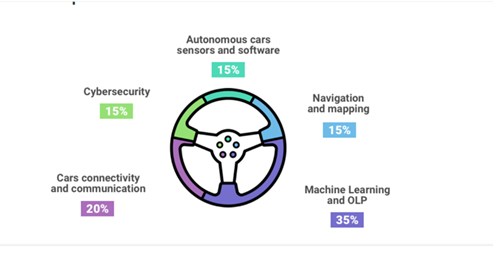
Self-driving car navigation consists of 4 key elements:
Car sensors,
Connectivity
High-accuracy positioning system
Machine learning algorithm
Fully autonomous cars need the ability to see beyond the range of their sensors. Knowledge of weather conditions, potholes, and traffic patterns enables the AI to decide how and where to drive the vehicle in the best, safest way.
High definition (HD) live maps help determine where the car is in your lane within centimeters of accuracy and even know the speed limit. This eliminates the need to halt and ask for directions.
The topmost sensory data on the map will make autonomous driving more efficient. Advanced control systems read sensory information to identify suitable navigation paths, obstacles, and related signs.
For autonomous vehicles to perceive their surroundings, they have to use different techniques, each with its unique form of digital information, eg. radar,
GPS, motion sensors, and computer vision. The digital data from various sources is transmitted and stored in a single form with homogenization; their differences are uncoupled. It can be transmitted, computed, and stored in a form compatible with the vehicles and their operating system and act upon it accordingly.
Homogenization also helps to take advantage of the tremendous increase of the computing power of hardware and software. This will lower the marginal costs in autonomous vehicles as data handling is done most efficiently and cost-effectively.
Reprogrammable systems of autonomous vehicles are that the core product will emphasize the software and its possibilities, unlike traditional parts of vehicles as they consist of software systems that drive the vehicle. The updates through reprogramming or editing the software can enhance the benefits of the owner of the vehicle.
Smart autonomous vehicles can generate certain updates and install them accordingly, e.g., new navigation HD maps. Moreover, the reprogrammable features of digital technology and smart machine learning give manufacturers stand differently on software. This tells us that autonomous vehicles are always upgradeable and improvable.