

As the pace of technology innovation accelerates, advanced networks, connected sensors, and automated systems will transform urban areas into integrated Smart Cities. Driven by the convergence of urbanization, mobility changes, climate change and digital transformation, over $400 billion annually is projected for Smart City investment by 2025. Understanding this new vision for the future of urban living is vital in our rapidly interconnected world.
Smart Cities integrate digital connectivity, computing power and technology into the very fabric of communities to enhance quality of life through better services, sustainability, resilience and economic development. Advanced pedestrian/traffic sensors, energy usage monitoring systems, smart street lighting, autonomous transport options and automation across municipal services typify Smart City ambitions.
Data analysis further helps cities gain greater insights around infrastructure usage while AI-powered predictive tools and digital twins (virtual city models for simulations) assist long-term urban planning and modeling scenarios. As global issues like climate change drive more people into cities, urban planners and municipal leaders must leverage technology like never before to address mounting challenges.
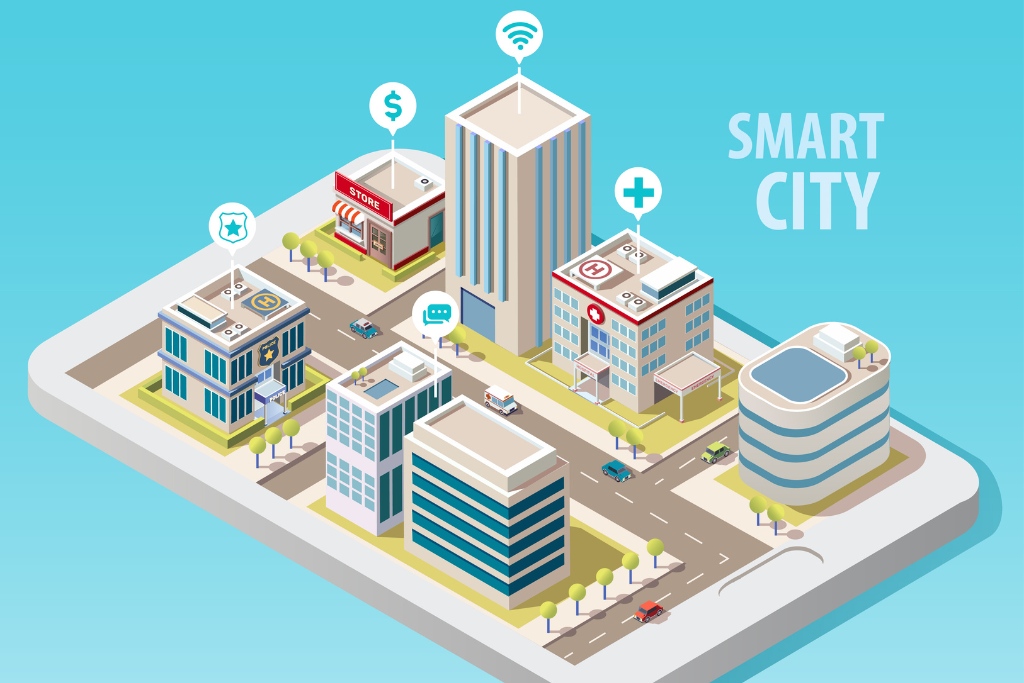
Early Smart City innovation leaders already testing sensing, automation and data-sharing include forward-thinking tech hubs (Singapore), manufacturing capitals (Barcelona) and even entire new purpose-built cities (Saudi Arabia’s Neom project). Meanwhile global tech giants like Cisco, Huawei and Google race to deliver comprehensive Smart City platforms integrating hundreds of software solutions.
However, Smart City development also raises reasonable privacy risks, job displacement concerns and accessibility barriers for marginalized groups if not implemented conscientiously. Navigating tradeoffs, new partners, shifting business models and residents wary of too much change continues keeping city officials on their toes.
Let’s examine what exactly constitutes a Smart City, key focus areas driving technology integration and how communities may need to adapt to this emerging tech-infused urban landscape.
WHAT MAKES A CITY “SMART”?

While no universal definition exists, most experts characterize Smart Cities as employing advanced information and communication technologies (ICT) to enhance quality, performance and interactivity of urban services while reducing resource consumption and costs.
The overarching Smart City goal involves using technology to improve all aspects of city operations and ultimately resident satisfaction. This includes modernizing infrastructure like transportation networks, water/waste systems, law enforcement, healthcare access, environmental monitoring and more by embedding internet-connected sensors and software.
Smart City technology deployment aims to boost municipal service efficiency, reduce expenses, increase transparency around operations and help cities prepare better for ongoing growth. The integrated data and analytics provide invaluable resident usage insights to inform infrastructure upgrades and expansion. With billions projected to pour into global Smart City initiatives over the next decade, their transformative impact will soon be ubiquitous.
THREE PILLARS OF SMART CITY TECHNOLOGY
Government, public and private sector partnerships drive technological innovation across three foundational pillars:
- Smart Infrastructure
Including transportation networks, power/water systems, connected buildings and sensors integrated into urban landscapes to monitor usage, conditions and performance. - Smart Services
Ranging from traffic control rooms to public safety & health to waste management – leveraging technology to improve delivery, automation and accountability across public services. - Smart Citizens
Providing digital platforms, connectivity and e-governance participation enabling residents to access amenities, engage authorities and contribute ideas.
Getting the technology mix right across these pillars along with sound policies and mgmt. allows cities to meaningfully evolve.
OPPORTUNITIES AND ADAPTION REQUIRED
Smart City development offers profound quality of life improvements for metropolitan denizens. However cities must also re-train personnel on new technical skills, strengthen cybersecurity, assuage privacy fears and sometimes overhaul departmental silos resistant to change.
While the surge of sensors and automation will eliminate certain jobs, new cross-disciplinary roles merging technology with urban policy and planning will also emerge. Smart cities run on data requiring computer scientists, data specialists, UX designers and more to operate integrated dashboards, analytics and simulate future scenarios.

Academia, private sector and government must also collaborate towards more agile digital infrastructure able to flexibly incorporate new solutions. With technology and society evolving rapidly, Smart Cities require built-in adaptability to add or change digitized systems and guard against premature obsolescence.
THE FUTURE OF SMART CITIES
The benefits technology offers global cities exploded in population size and complexity are too vast to ignore – as are the risks if not thoughtfully implemented. Guided by ethical digital principles and inclusive economic development, the mission of crafting Smart Cities offers a monumental opportunity to shape the future of society at large.
Getting governance, user trust and cross-sector collaboration right will unlock innovation across connected energy, transportation, public safety and environmental systems making cities more livable and sustainable. With urban migration accelerating, the tomorrow’s communities await manifestation as architects of the ongoing technology revolution.
To stay ahead of the curve in artificial intelligence subscribe to our AISAMOSA Newsletter! For a byte-sized dose of AI excellence delivered straight to your inbox!