

In the ever-evolving landscape where digital entertainment and gaming blend, the New York Times has once again proven its prowess in captivating puzzle enthusiasts with its latest offering: Strands. This ingenious word game has taken the online gaming community by storm, seamlessly blending the nostalgia of traditional word searches with a modern twist that keeps players coming back for more.
The New York Times’ Gaming Legacy
Before we dive into the intricacies of Strands, let’s take a moment to appreciate the New York Times’ illustrious history in the world of puzzles. Since the introduction of their iconic crossword in 1942, the Times has consistently delivered engaging word and logic games that challenge and delight solvers across generations. The Mini Crossword, Spelling Bee, Letter Boxed, Tiles, and Vertex are just a few examples of their commitment to linguistic entertainment.
Strands: Killing Time with Acuteness
Enter Strands, the latest brainchild of the New York Times’ game development team. This innovative word search game has quickly garnered a dedicated following, even during its beta testing phase. Now, as it officially joins the Times’ games portfolio, Strands is poised to become a daily obsession for logophiles and casual gamers alike.
Play Guide 101
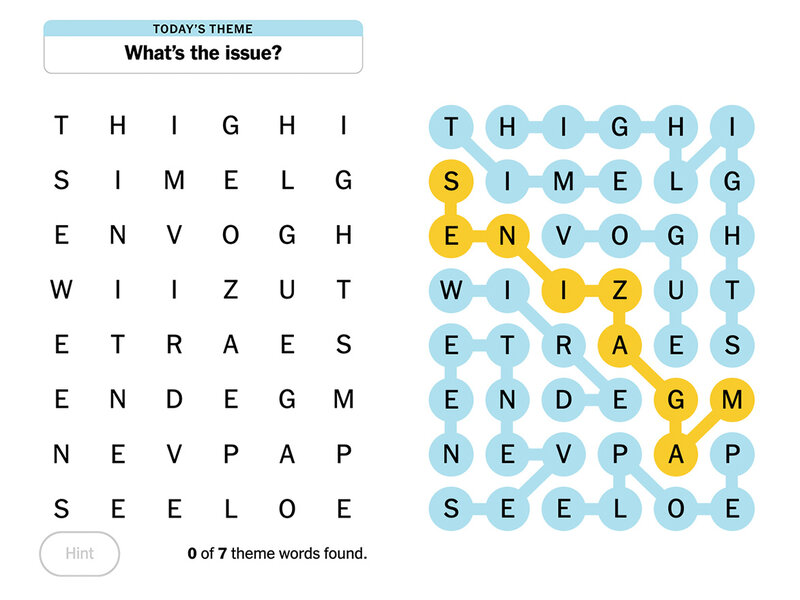
At its core, Strands presents players with a 6×8 grid of seemingly random letters. However, hidden within this jumble are several theme-related words waiting to be discovered. The game provides a category hint at the top of the grid, offering a starting point for players to begin their word hunt.
But here’s where the New York Times adds its signature twist: players must not only find the theme words but also uncover the “spanagram” – a special word that describes what all the other words have in common. This additional layer of complexity elevates Strands from a simple word search to a true cognitive challenge.
New York Times’ Strands: Tips and Tricks
- Corner Conundrum: Start your search in the corners of the grid. These areas often contain more obvious words and can provide a foothold for solving the rest of the puzzle.
- Hint Harvesting: If you’re struggling to find theme words, try identifying any four-letter (or longer) words on the board. Discovering three of these will unlock a hint, revealing one of the theme words.
- Spanagram Speculation: As you uncover theme words, start brainstorming potential spanagrams. What could all these words have in common?
- Pattern Recognition: Look for common prefixes, suffixes, or letter combinations that might relate to the theme.
- Process of Elimination: As you find words, mentally cross out the used letters. This can help you focus on the remaining letters and potential words.
Strands: A Balance with a Challenge
One of the most appealing aspects of Strands is its accessibility. With a solve rate of around 81%, it strikes a perfect balance between challenge and achievability. This stands in contrast to some of the Times’ more difficult offerings, like Connections, which is deliberately trickier.
The New York Times has carefully curated its games portfolio to offer a range of difficulty levels, ensuring there’s something for everyone. Strands fills a crucial niche, providing a satisfying solve for players looking for a daily word challenge that won’t leave them frustrated.
The Digital Knacks of Strands
The introduction of Strands is more than just a new game; it’s a key component of the New York Times’ broader digital strategy. As traditional advertising revenue declines, the Times has pivoted towards growing its subscription business through engaging digital content.
The success of games like Wordle, Connections, and now Strands has been instrumental in driving digital subscriptions. In fact, the Times’ digital subscription revenue crossed the $1 billion mark for the first time in 2023, with games playing a significant role in this achievement.
The New York Times’ Games app, which offers limited free access to puzzles like Wordle and Strands, has seen tremendous growth. Full access, including the Crossword and other premium games, is available for a modest monthly fee. This freemium model has proven highly effective in attracting and retaining subscribers.
New York Times’ Gaming World
With the success of Strands and its predecessors, the pressure is on for the New York Times to continue innovating in the gaming space. Jonathan Knight, head of Games at the Times, acknowledges that the bar is now higher than ever. However, he remains confident in the team’s ability to develop new, engaging puzzles that will captivate players.
As the Times continues to expand its gaming offerings, we can expect to see more creative and challenging puzzles that push the boundaries of what’s possible in digital word games. The success of Strands demonstrates that there’s still plenty of untapped potential in this space.

A Game That Can Never Fail
Strands represents the perfect fusion of traditional word search mechanics and modern gaming innovation. By combining familiar elements with unique twists like the spanagram, the New York Times has created a puzzle that’s both accessible and deeply engaging.
As Strands takes its place alongside other New York Times gaming classics, it’s clear that the venerable institution’s commitment to quality puzzles remains as strong as ever. Whether you’re a seasoned wordsmith or a casual gamer looking for a daily brain teaser, Strands offers a delightful challenge that’s sure to become a part of your daily routine.
So, the next time you’re looking for a quick mental workout, why not give Strands a try? Who knows – you might just find yourself unraveling words and spanagrams with the best of them, all while enjoying the latest offering from the puzzle masters at the New York Times.