
Apple has taken its time entering the AI race, but the tech giant’s approach with “Apple Intelligence” aims to plug some key gaps left by the initial wave of generative AI. For Apple, AI is really about personalized intelligence, layering an adaptive context atop powerful artificial intelligence models.
Apple Intelligence is baked into the latest versions of iOS, iPadOS, and macOS, allowing AI assistance across apps and operating system functions like Siri. Privacy remains a core tenet, with many tasks running on-device using Apple’s custom silicon, while cloud processing leverages dedicated “Private Cloud Compute” servers. Users even get native access to ChatGPT without tracking or logging.
What’s Cooking in Apple?
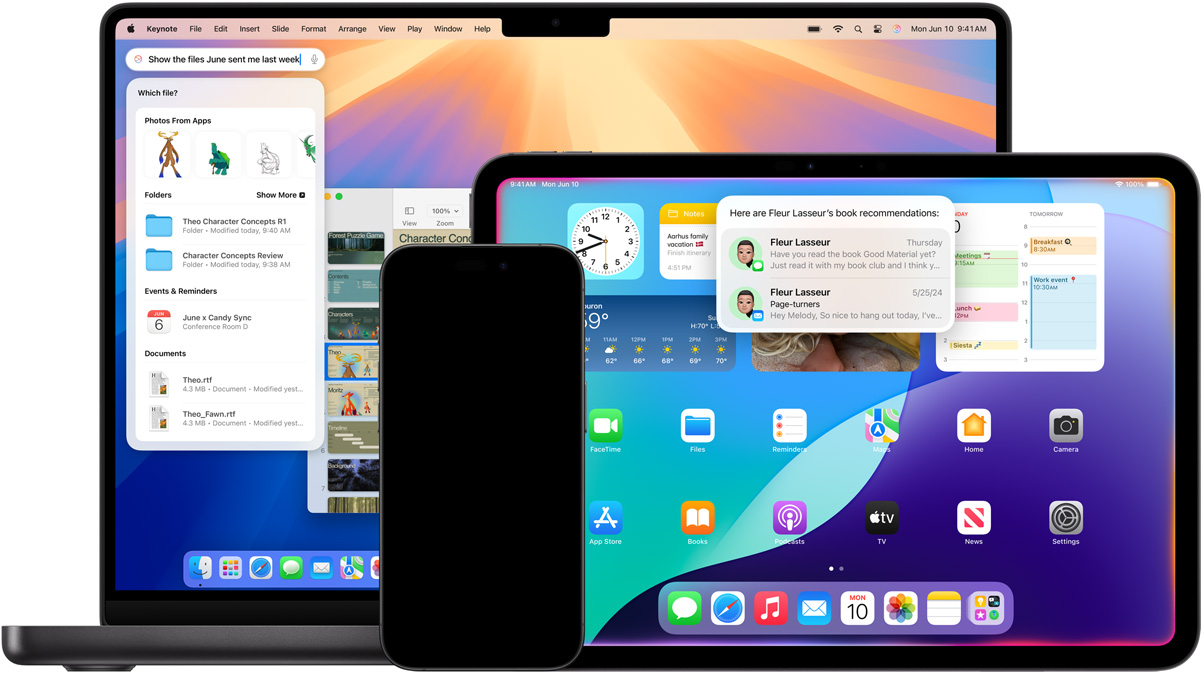
So how is this different from Samsung, Google and others? No other company has rolled out such comprehensive, cross-platform AI integration for writing assistance in apps, personalized email triage, and image generation tailored to your personal photo library. Apple’s devices can now summarize emails with key action items, prioritize notifications based on context, and even create new images blending your friends and family into custom scenes.
The new on-device image intelligence takes visual search to another level, allowing queries like “find the green dress” across your photo library. You can extract data like passport numbers from images and insert it directly into forms. It’s an intuitive leap beyond basic object recognition.
Then there’s the revamped Siri, which Apple hopes will finally deliver on the promise of its original intelligent assistant. Siri now understands text input with conversational context awareness. It’s a knowledgebase containing core device data, able to explain how iPhone features work and assist with tasks in each app’s unique context.
On privacy, Apple says most queries will be processed entirely on-device using its custom silicon. For cloud requests, it uses anonymized Private Cloud Compute models running on Apple silicon servers that do not have access to user data. The system-wide ChatGPT integration is carefully sandboxed, with OpenAI unable to log users or queries – though paid ChatGPT subscribers can link their accounts.
This intense focus on on-device AI processing power could spark an “upgrade supercycle” according to analysts. Only Apple’s latest premium iPhones, iPads and Macs with the most powerful chips can handle the real-time language processing required.
The iPhone 15 Pro and Pro Max, powered by the A17 chip, are the only new iPhones able to run the full Apple Intelligence suite, including automatic transcription, image generation, and a smarter conversational Siri. Older iPhone 15 models simply can’t match the AI processing capabilities. Similarly, only M1, M2 and M3 iPads and Macs up to 3 years old make the cut.
Apple Intelligence- The Talk of the Town
Critics argue this split, leaving out older devices, is a cynical ploy to force upgrade cycles and profits. “Apple’s decision appears to be a strategy to force iPhone upgrade cycles, their key product,” said analyst Gadjo Sevilla. “Consumers could see this as user-hostile forced obsolescence.”
However, analysts like Francisco Jeronimo of IDC counter that Apple had little choice given the vast performance gaps across its lineup once it started segmenting its latest chips. “Most Apple Intelligence functionality runs on-device and requires tremendous processing power that only the latest chips can handle – not just for the AI models but system memory and storage too.”
Jeronimo argues Apple is playing a long game here, laying groundwork for an “upgrade supercycle” as AI fundamentally changes how we use devices. “The majority won’t rush to upgrade just for a few AI features. But once we understand AI’s impact, like smartphones disrupting everything, then the supercycle will kick in.”
Tim Cook positioned Apple Intelligence as setting “a new standard for privacy in AI” with novel cloud computing models that verifiably discard all user data. But the push towards more “agentic” AI that acts based on prompts raises new security concerns around “prompt injection” attacks.
Apple has partnered with OpenAI to integrate ChatGPT, although the deal is non-exclusive. Cook promised Apple Intelligence will “take the experience to new heights” by infusing products with generative AI while safeguarding privacy.
Apple’s Usual Unusual Way
The reality is generative AI’s data hungerclashed with Apple’s strict privacy ethos, so Apple got creative. Apple Intelligence engines run exclusively on Apple silicon, using on-device models and anonymized private cloud servers to sidestep data access issues.
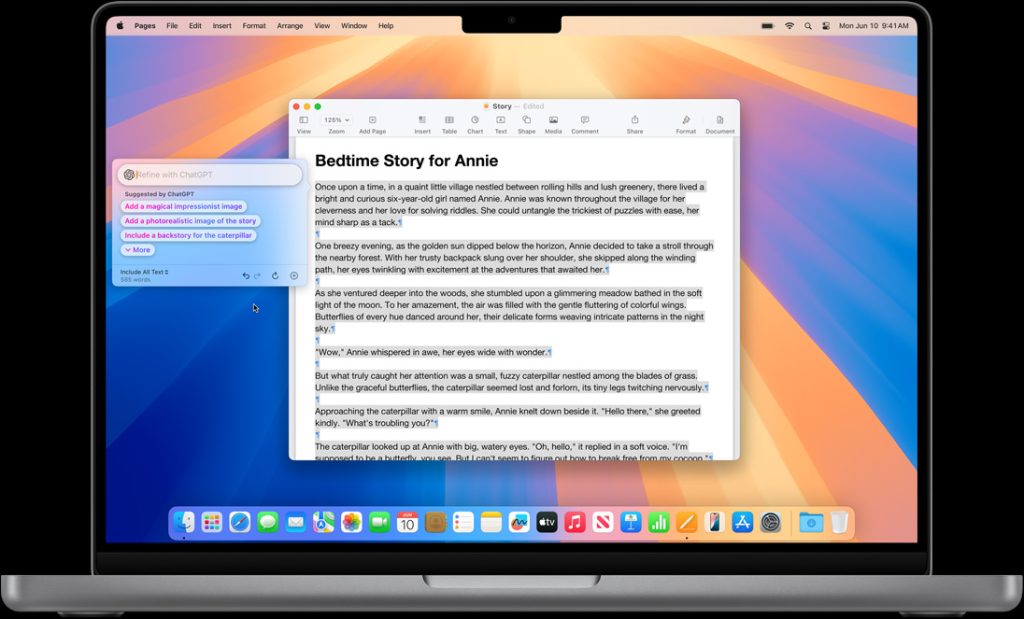
Users get ChatGPT integrated systemwide, but OpenAI cannot log queries or data. There are personalized AI creations like custom emoji generation, smart email summarization, and image searches by descriptions like “green dress” that leverage your actual photos and personal context.
Siri also gets a major upgrade, with conversational awareness, text input, and deep app integration to assist within each program’s unique context, drawing from a knowledge base about device functions.
Critics blast this split as a cynical cashgrab to drive upgrades. But others argue Apple is being pragmatic about the immense performance demands rather than artificially constraining capabilities.
Regardless, Apple is making a long-term bet that optimized on-device AI combining generative models with personal context and data protection will be transformative.
While arguably late to generative AI, Apple hopes its tailored approach combining privacy and personalization will make the experience feel more intuitive, assistive, and secure – providing that elusive “it just works” factor as we enter an AI-driven era.