
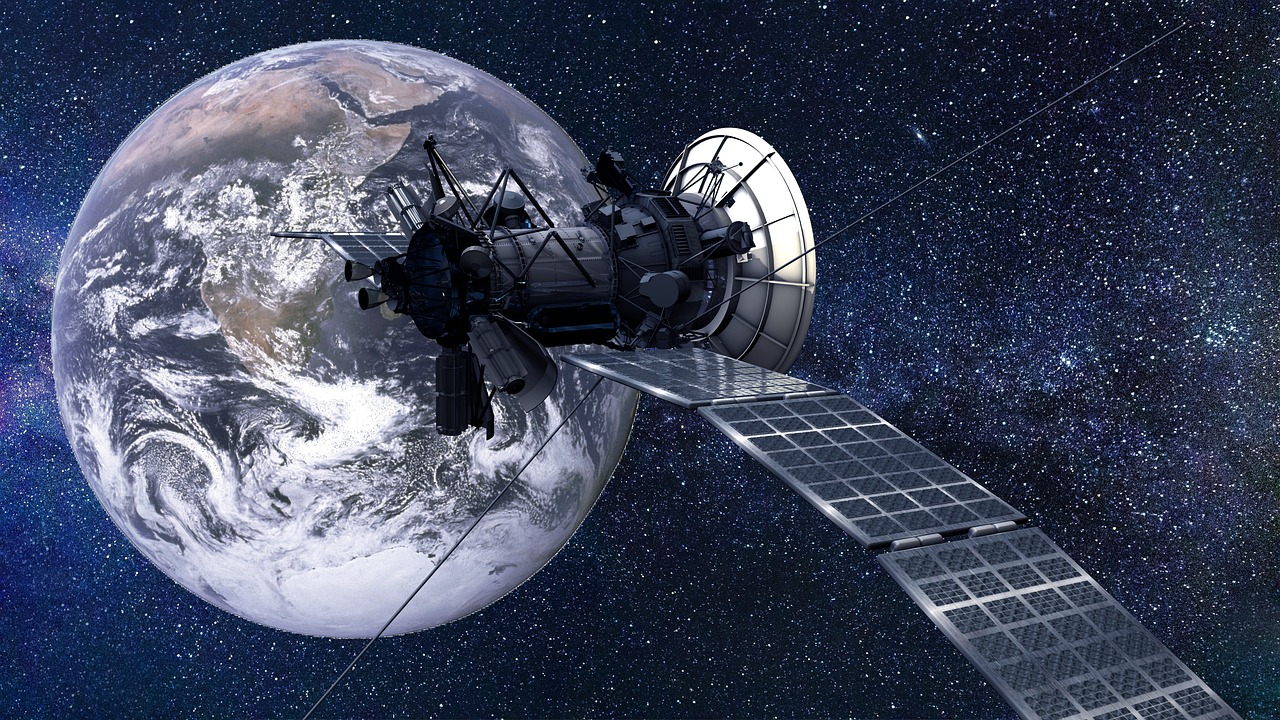
As humanity’s quest to unravel the mysteries of the cosmos continues, a powerful ally has emerged – artificial intelligence (AI). The integration of AI into space exploration endeavors has ushered in a new era, one where cutting-edge technologies are propelling us further into the depths of the universe than ever before. From mission planning and data analysis to autonomous systems and decision-making, AI’s influence is permeating every aspect of space tech, redefining the boundaries of what’s possible.
Space Tech: The Convergence of AI and Cosmic Ambitions
From the earliest days of human civilization, our curious gaze has been drawn to the celestial wonders that adorn the night sky. Driven by an innate desire to explore the unknown, we have ventured beyond the confines of our terrestrial home, pushing the boundaries of space exploration with each passing decade. However, as we stand on the precipice of a new era, an unlikely ally has emerged – artificial intelligence (AI) – poised to revolutionize the way we approach and comprehend the vast cosmos.
AI as the Catalyst for Cosmic Exploration
The integration of AI into space tech has ushered in a paradigm shift, disrupting traditional methods and opening up unprecedented opportunities for scientific discovery and technological advancement. No longer constrained by the limitations of human cognition, we can now harness the power of machine learning algorithms and sophisticated computational models to tackle challenges that once seemed insurmountable.
From mission planning and trajectory optimization to autonomous systems and robotic explorers, AI’s influence permeates every aspect of space exploration. Its ability to process vast amounts of data, identify patterns, and make informed decisions in real-time has become an invaluable asset, enabling us to push the boundaries of exploration like never before.
Unlocking Cosmic Secrets with AI-Driven Analysis
The cosmos is a vast repository of data, waiting to be deciphered and transformed into groundbreaking scientific insights. However, the sheer volume and complexity of this information often overwhelm traditional analysis methods. Enter AI, a powerful tool capable of sifting through vast datasets, identifying patterns, and extracting meaningful conclusions that would otherwise remain elusive.
From analyzing spectroscopic data to detect exoplanets and their potential for harboring life to processing images and signals from deep space probes, AI’s analytical prowess is revolutionizing our understanding of the cosmos. Machine learning algorithms can detect subtle nuances and correlations that may have gone unnoticed by human observers, unlocking new avenues of exploration and propelling our scientific knowledge forward.
The Synergy of AI and Cutting-Edge Space Tech
The integration of AI into space exploration has given rise to a new breed of cutting-edge gadgets and technologies, each more impressive than the last. From ultra-compact and power-efficient computers designed to withstand the harsh conditions of space to advanced sensors and imaging systems capable of capturing unprecedented detail, the union of AI and space tech has ushered in a golden age of innovation.
One such marvel is the James Webb Space Telescope, a true engineering and technological marvel. Equipped with AI-driven systems for image processing, this cutting-edge gadget has already provided us with breathtaking glimpses into the early universe, revealing cosmic wonders that were previously beyond our reach.
As we delve deeper into the convergence of AI and space exploration, we stand at the precipice of a new frontier, one where the boundaries of human knowledge and technological capabilities are continuously pushed, propelling us towards a future where the secrets of the cosmos may finally be unveiled.
Mission Planning and Trajectory Optimization with AI
One of the most significant contributions of AI in space exploration lies in its ability to streamline mission planning and optimize trajectories. With vast amounts of data to process and countless variables to consider, AI algorithms can quickly analyze and synthesize information, providing invaluable insights that human minds alone would struggle to achieve. By leveraging machine learning techniques, space tech agencies can identify the most efficient flight paths, accounting for factors such as fuel consumption, orbital mechanics, and celestial body interactions.
Moreover, AI-driven simulations can predict potential hazards and contingencies, enabling mission planners to proactively mitigate risks and ensure the safety of spacecraft and their precious cargo. This level of precision and foresight not only enhances mission success rates but also paves the way for more ambitious and daring space endeavors.
Autonomous Systems and Robotic Explorers
As space missions venture further into the unknown, the ability to operate autonomously becomes increasingly crucial. The vast distances involved in deep space exploration make real-time communication and control from Earth impractical, necessitating the development of intelligent, self-governing systems. AI-powered robotic explorers, equipped with advanced sensors and decision-making capabilities, are at the forefront of this revolution.
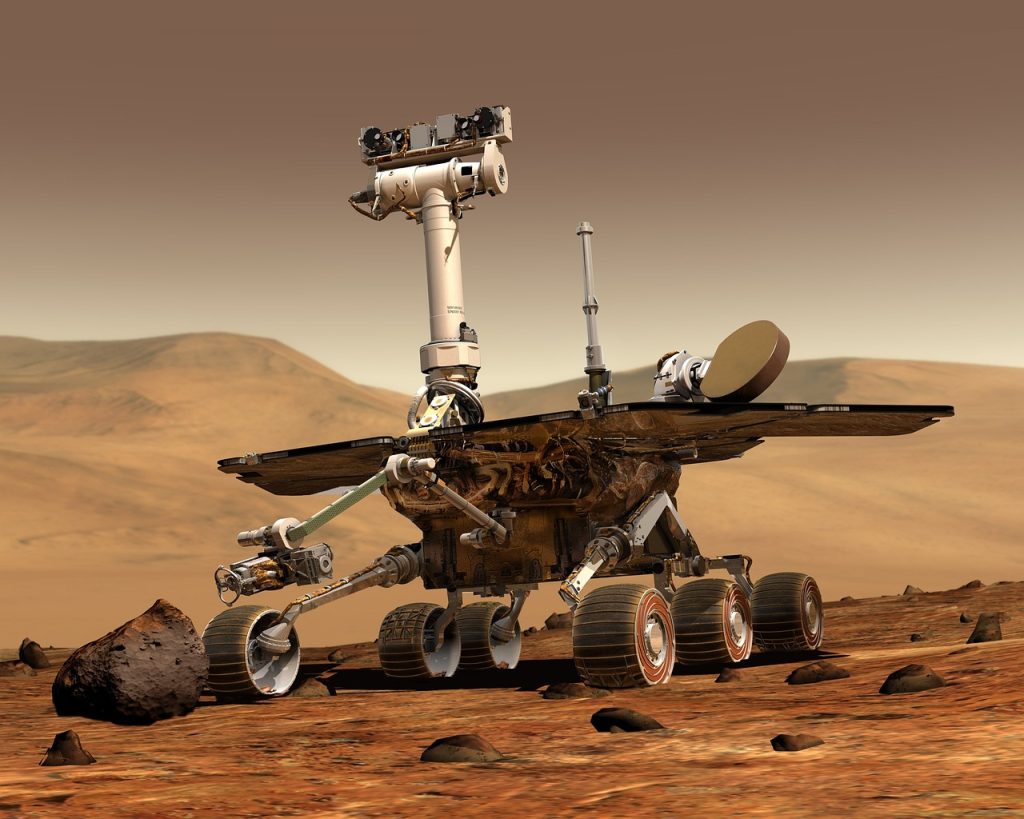
Take, for instance, NASA’s Perseverance rover, currently exploring the enigmatic terrain of Mars. Powered by cutting-edge AI algorithms, this robotic marvel can navigate complex environments, identify scientifically significant targets, and even select and collect rock samples autonomously. Such capabilities not only increase mission efficiency but also open up new frontiers for scientific discovery, allowing us to explore regions previously deemed too hazardous or inaccessible for human intervention.
Data Analysis and Scientific Breakthroughs
The vast expanses of space are teeming with invaluable data, waiting to be deciphered and transformed into groundbreaking scientific insights. However, the sheer volume and complexity of this information often overwhelm traditional analysis methods. Enter AI, a powerful tool capable of sifting through vast datasets, identifying patterns, and extracting meaningful conclusions.
Overcoming Challenges and Ethical Considerations
While the potential of AI in space exploration is undeniable, its implementation is not without challenges. Issues such as data privacy, algorithmic bias, and the ethical implications of decision-making by artificial intelligence systems must be carefully addressed. As we increasingly rely on AI for critical tasks, ensuring the transparency, accountability, and fairness of these systems becomes paramount.
Moreover, the development of robust cybersecurity measures is crucial to safeguard space tech and missions from potential cyber threats or malicious interference. Collaboration between space agencies, technology companies, and ethical experts will be essential in navigating these complex issues and ensuring the responsible and sustainable integration of AI into space exploration endeavors.
The Future of Space Tech: Limitless Possibilities
As we stand on the cusp of a new era in space exploration, the possibilities afforded by the convergence of AI and space tech are truly limitless. From autonomous deep space tech probes capable of traversing the vast expanses of interstellar space to intelligent robotic swarms that can construct and maintain extraterrestrial habitats, the future promises to be an exhilarating journey of discovery and innovation.
Moreover, the insights and breakthroughs achieved through AI-powered space tech exploration have the potential to revolutionize our understanding of the universe and our place within it. Perhaps we will uncover evidence of extraterrestrial life, unravel the mysteries of dark matter and dark energy, or even gain a deeper comprehension of the very fabric of spacetime itself.
As we continue to push the boundaries of exploration, one thing is certain: the integration of AI into space tech will be a driving force, propelling us towards new horizons and redefining what’s possible in our quest to unlock the secrets of the cosmos.