
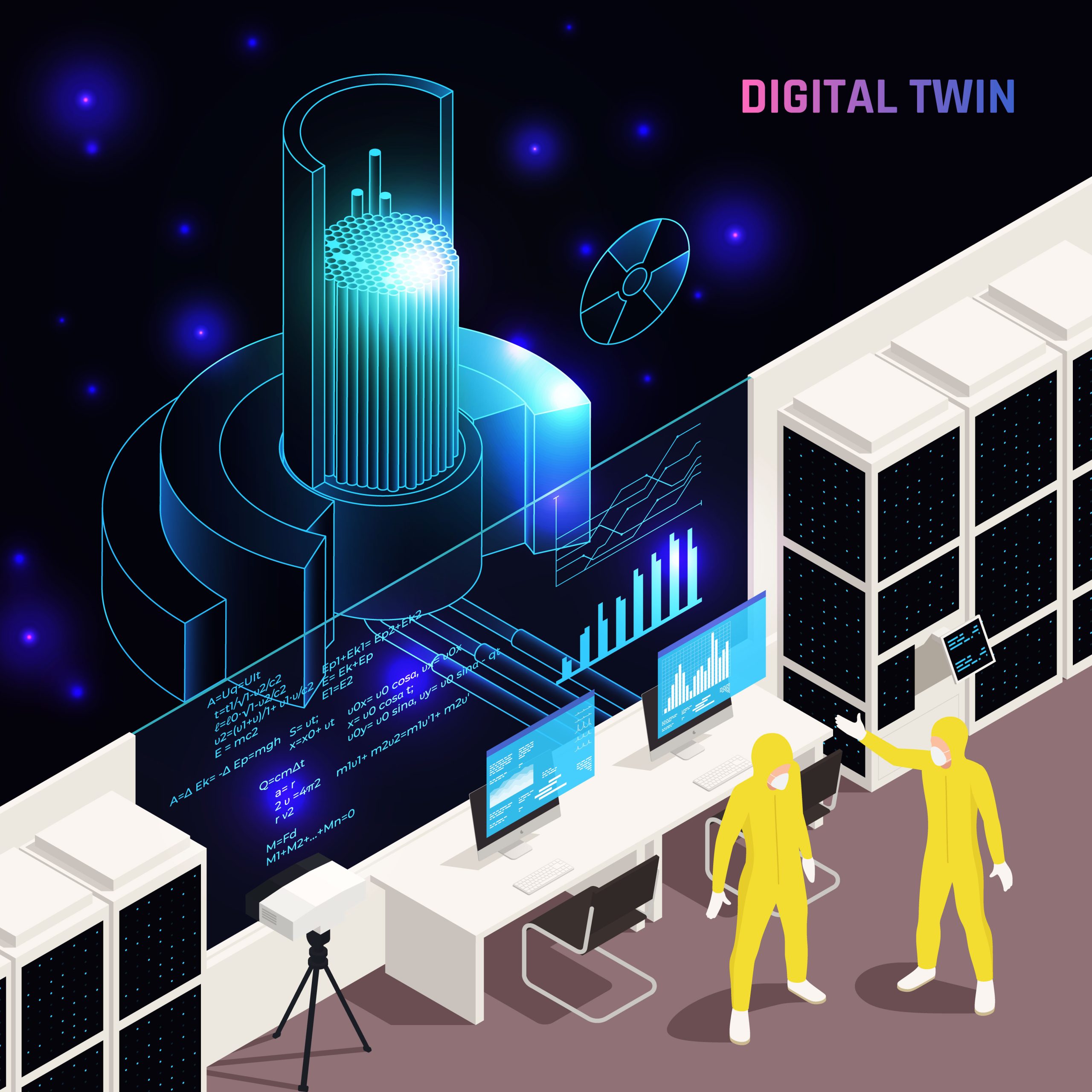
In our increasingly digital world, the line between the virtual and physical realms continues to blur. We now have the ability to create detailed digital replicas of real-world objects, processes, and even entire environments. These virtual counterparts, known as digital twins, offer us an unprecedented level of insight and control over their physical twins.
But what exactly is a digital twin, and why is this technology garnering so much attention? Let’s dive into the nuts and bolts of this fascinating concept.
The Anatomy of a Digital Twin
At its core, a digital twin is a virtual representation of a physical entity or process. It’s composed of three key elements:
- The physical object or process itself, existing in the real world.
- The digital twin, a virtual model residing in the digital realm.
- The data connection that links and synchronizes the physical and virtual twins.
This data connection is what sets digital twins apart from traditional computer models or simulations. It’s a continuous, bidirectional flow of information that ensures the digital twin accurately reflects the current state of its physical counterpart. Sensors, Internet of Things (IoT) devices, and other data sources feed real-time information into the digital twin, allowing it to “mirror” the physical entity’s performance, condition, and behavior.
Conversely, changes made to the digital twin can potentially be applied to the physical entity, enabling predictive analysis, optimization, and even remote control capabilities.

The Spectrum of Digital Twins
Digital twins can exist at various levels of complexity, ranging from individual components to entire systems or processes. Here’s a quick breakdown:
- Component Twins: Focused on individual parts or sub-assemblies, such as a turbine blade or a car engine component.
- Asset Twins: Representing complete products or assets, like an airplane or a manufacturing robot.
- System Twins: Modeling complex systems composed of multiple interconnected assets, such as a power plant or a factory production line.
- Process Twins: Encompassing entire workflows or operations, such as a supply chain or a city’s transportation network.
The level of detail and fidelity in a digital twin can vary greatly depending on its intended purpose and the available data sources. Some twins may prioritize visual accuracy, creating photorealistic 3D models, while others may focus more on capturing operational data and performance metrics.
Benefits Across the Board
The potential applications of digital twins are vast and span multiple industries. Here are just a few examples of how this technology is driving innovation:
- Manufacturing: Digital twins allow manufacturers to virtually test and optimize products, processes, and factory layouts before committing resources to the physical world. Predictive maintenance and condition monitoring also become more effective, reducing downtime and extending asset lifecycles.
- Healthcare: Patient-specific digital twins, based on medical imaging, genetic data, and health records, could revolutionize personalized medicine. Doctors can simulate treatments and forecast outcomes, improving care while minimizing risks.
- Urban Planning: City planners can create detailed digital twins of urban environments, allowing them to model the impact of new infrastructure projects, traffic patterns, and environmental factors before breaking ground.
- Energy and Utilities: Digital twins of power plants, wind farms, and electrical grids enable operators to optimize energy production, distribution, and consumption, leading to increased efficiency and reduced emissions.
- Retail and Ecommerce: Virtual twins of physical stores and online shopping experiences help retailers analyze customer behavior, test merchandising strategies, and enhance the overall shopping experience.
Overcoming Challenges
While the potential rewards of digital twins are enticing, realizing their full value isn’t without its challenges. Here are some of the key hurdles organizations must overcome:
- Data Management: Digital twins are data-hungry beasts, requiring vast amounts of clean, well-structured information from disparate sources. Establishing robust data pipelines and governance practices is crucial.
- Interoperability: With multiple software platforms and data formats involved, ensuring seamless integration and interoperability between systems is a significant technical challenge.
- Security and Privacy: As digital twins become more interconnected and data-driven, addressing cybersecurity risks and safeguarding sensitive information becomes paramount.
- Cost and Complexity: Developing and maintaining digital twins, especially at larger scales, can be resource-intensive and require specialized skills and infrastructure.
- Cultural Adoption: Successful implementation of digital twins often necessitates a cultural shift within organizations, embracing data-driven decision-making and new ways of working.

The Future is Digital (and Physical)
As the digital twin concept continues to mature, we can expect to see even more advanced and sophisticated applications emerge. Cognitive digital twins, powered by artificial intelligence and machine learning, could become intelligent advisors, capable of recommending actions and even making autonomous decisions based on their analysis of real-world data.
The integration of digital twins with other emerging technologies, such as augmented reality (AR) and the metaverse, also holds exciting possibilities. Imagine being able to overlay digital twin data and visualizations onto the physical world through AR, or interacting with a virtual replica of an entire city within a metaverse environment.
While the path ahead may be challenging, the potential rewards of digital twin technology are immense. By bridging the divide between the virtual and physical realms, we can gain unprecedented insights, optimize processes, and make more informed decisions that drive innovation and positive change.
The future is not just digital or physical – it’s the seamless convergence of both worlds, and digital twins are leading the way.