

The field of robotics in healthcare is revolutionizing the industry, bringing remarkable advances in surgical procedures, patient care, and clinical workflows. From surgical assistance robots performing intricate operations with superhuman precision to autonomous mobile robots sanitizing hospital rooms and delivering supplies, these cutting-edge technologies are reshaping the medical landscape.
At the forefront of this transformation is the integration of artificial intelligence (AI), computer vision, and data analytics into robotic systems. These intelligent capabilities are expanding the horizons of what robotics in healthcare can achieve, enabling them to take on increasingly complex and autonomous tasks within the healthcare ecosystem.
Surgical Precision and Minimally Invasive Procedures
One of the most remarkable applications of robotics in healthcare is in the realm of surgery. Surgical-assistance robots, equipped with advanced motion control technologies and AI-enabled computer vision, are allowing surgeons to push the boundaries of precision and accuracy.
These robots excel in performing minimally invasive surgeries, where intricate procedures are carried out through small incisions. Robotic arms, with their unwavering steadiness and dexterity, can navigate the human anatomy with unparalleled precision, reducing trauma and enabling faster recovery times for patients.
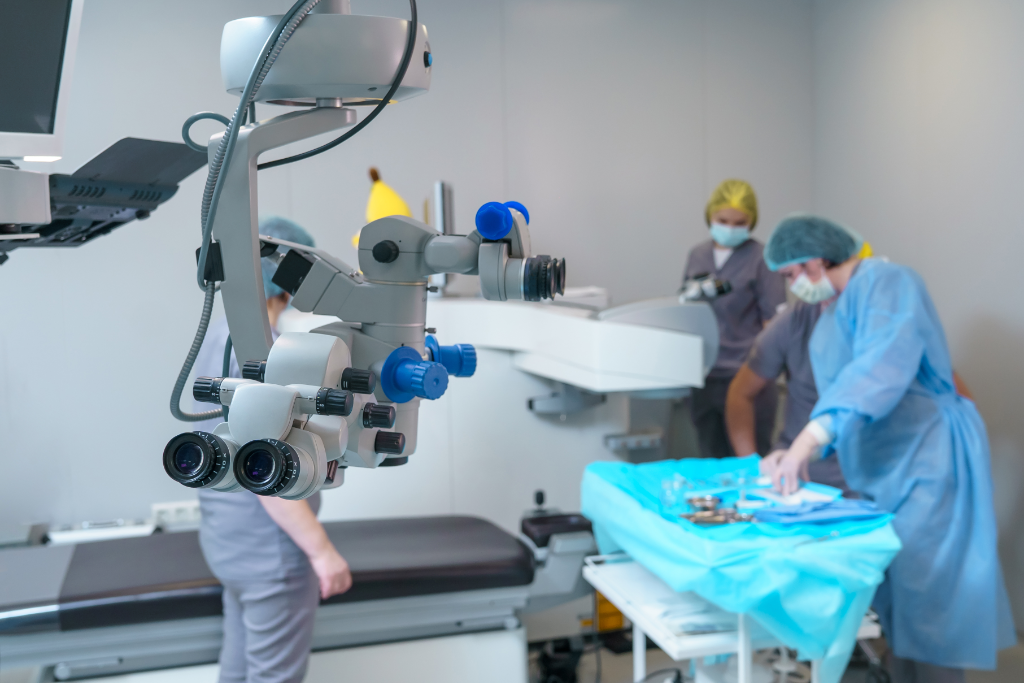
Take, for instance, robotic-assisted hysterectomies or prostatectomies. What were once open surgeries requiring large incisions and extended hospital stays are now routinely performed with minimal invasion, thanks to these remarkable robotics in healthcare systems. The robots’ ability to operate through button-sized incisions drastically reduces the risk of infection and other complications, ultimately improving patient outcomes.
But surgical robots aren’t just limited to soft tissue procedures. They’re also making waves in the field of orthopedics. Using 3D imaging, data analytics, and AI modeling, these robots can be pre-programmed to perform common orthopedic surgeries, such as knee and hip replacements, with pinpoint accuracy and predictable results.
The impact of surgical robots extends beyond the operating room itself. These systems enable surgeons to share live video feeds with colleagues from around the world, facilitating real-time consultations and collaboration. This ensures that patients have access to the collective expertise of the best surgeons in their field, regardless of geographical boundaries.
Streamlining Clinical Workflows and Enhancing Patient Care
Robotics in healthcare are not just confined to the surgical theater; they’re also playing a pivotal role in streamlining clinical workflows and enhancing patient care throughout the healthcare ecosystem.
Enter autonomous mobile robots (AMRs) – intelligent, self-navigating machines that are transforming the way hospitals and clinics operate. These robots are taking on a wide range of tasks, from delivering medications and medical supplies to disinfecting patient rooms and transporting linens.

By automating these routine yet essential tasks, AMRs are freeing up healthcare workers to focus their time and energy on direct patient care, ultimately improving the overall quality of service and patient experience.
One particularly promising application of AMRs is in the fight against hospital-acquired infections (HAIs). Specialized disinfection robots are being deployed to sanitize patient rooms and equipment using ultraviolet (UV) light, hydrogen peroxide vapors, or advanced air filtration systems. These robots can reach areas that are difficult for human cleaners to access, ensuring thorough and consistent disinfection – a critical factor in reducing the spread of infections within healthcare facilities.
But AMRs aren’t just limited to logistical and cleaning tasks. They’re also playing a crucial role in enhancing patient monitoring and engagement. Telepresence robots, equipped with cameras and video conferencing capabilities, enable doctors and specialists to virtually “accompany” patients during rounds or consultations, providing remote expertise and care without the need for physical proximity.
Social robots, designed to interact directly with humans, are being used in long-term care facilities to provide cognitive engagement, encourage treatment compliance, and offer emotional support to patients. These friendly robots can help alleviate caregiver workloads while improving patients’ emotional well-being and overall quality of life.
The Cutting Edge: Intelligent Therapeutics and Rehabilitation
Beyond surgical assistance and clinical support, robotics is also making significant strides in the field of intelligent therapeutics and rehabilitation. Modular robots, such as therapeutic exoskeletons and prosthetic robotic limbs, are empowering individuals with physical impairments to regain mobility and independence.
For patients recovering from strokes, paralysis, or traumatic brain injuries, robotic exoskeletons can provide crucial support and assistance during rehabilitation exercises. These intelligent systems, equipped with depth cameras and AI algorithms, can monitor a patient’s form, track progress, and even provide real-time coaching and encouragement.
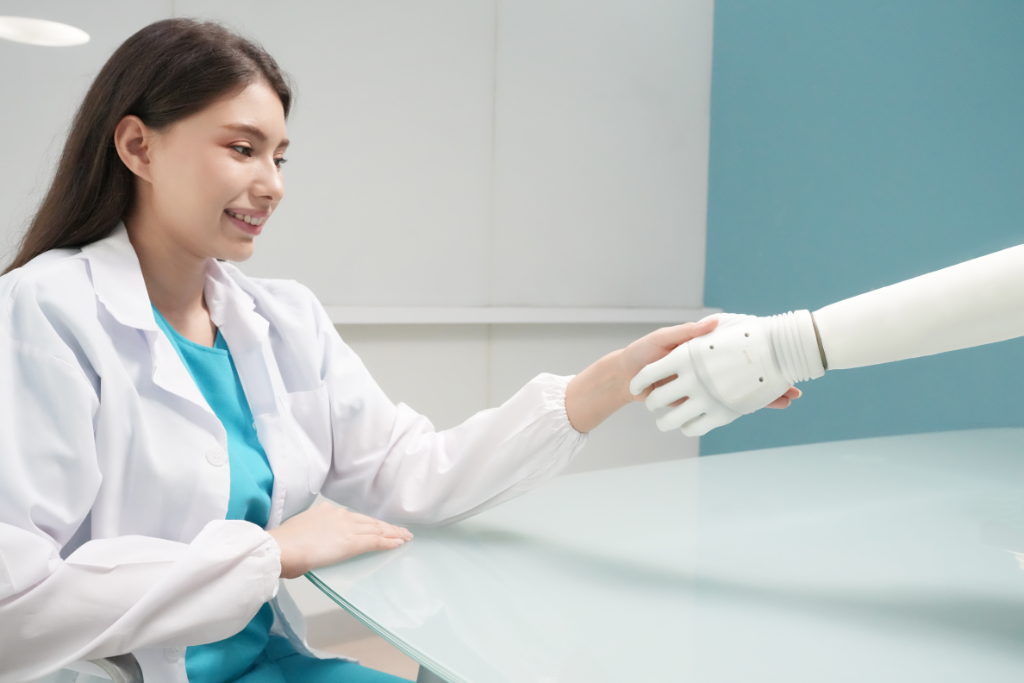
Robotics in healthcare extends upto the world of prosthetics, where robotic limbs controlled by advanced neural interfaces are offering unprecedented levels of dexterity and natural movement. By decoding neural signals from the brain or residual muscle activity, these bionic prosthetics can respond to the user’s intentions, allowing for seamless integration and improved quality of life.
Fueling Innovation: Intel’s Role in Medical Robotics
At the heart of many of these groundbreaking robotic systems lies Intel’s cutting-edge technology portfolio. From high-performance processors and computer vision capabilities to AI acceleration and 5G connectivity, Intel is providing the foundational building blocks for the next generation of robotics in healthcare.
The Intel® Distribution of OpenVINO™ toolkit, for instance, streamlines the development of vision applications on Intel® platforms, enabling everything from surgical-assistance robots to autonomous service robots that navigate hospital corridors.
Intel’s Edge Insights for Autonomous Mobile Robots software development kit empowers developers to build and deploy end-to-end robot applications faster and more efficiently, accelerating innovation in the AMR space.
Moreover, Intel’s collaboration with technology providers and research institutes is driving the discovery of new applications for AI and IoT technologies within robotics in healthcare. By providing technology and research support, Intel is actively contributing to ongoing innovations that increase automation, drive efficiencies, and solve some of the greatest healthcare challenges.
The Future of Robotics in Healthcare
As we look to the future, the integration of robotics in healthcare will only deepen and evolve. Machine learning, data analytics, and computer vision will continue to advance, enabling robots to take on increasingly complex and autonomous tasks within the medical field.
We can envision a future where surgical robots, armed with advanced AI capabilities, can independently perform specific sub-procedures under the watchful eye of a surgeon, further enhancing precision and efficiency.
Rehabilitation robots may leverage augmented reality and neural interfaces to provide immersive, personalized therapy experiences, tailored to each patient’s unique needs and recovery journey.
And in hospitals and clinics, fleets of autonomous robots could seamlessly coordinate their efforts, handling everything from supply chain management to patient transport and environmental monitoring, creating a seamless and optimized healthcare ecosystem.

While the potential of robotics in healthcare is vast, it’s important to remember that these technologies are not meant to replace human healthcare professionals. Rather, they are designed to augment and support the work of doctors, nurses, and caregivers, enabling them to focus on the human elements of care that machines cannot replicate.
As we embrace this technological revolution, we must also prioritize ethical considerations, patient privacy, and the responsible development and deployment of these powerful tools. By striking the right balance between innovation and responsible stewardship, we can harness the full potential of robotics in healthcare to transform the ways the industry evolve, improve patient outcomes, and ultimately, enhance the human experience of healing and well-being.