

In the ever-evolving world of smartphones, one category of devices is making a triumphant return and captivating tech enthusiasts worldwide – foldable phones. The year 2023 has seen a resurgence of these marvels of engineering and technology, with newly launched models from renowned brands vying for the spotlight. Once considered a gimmick, foldable phones have now proven their worth, offering a unique and immersive user experience like never before.
Leading the charge are Samsung, Google, and Motorola, each unveiling their latest offerings in the form of the Galaxy Z Fold 5, Pixel Fold, and Razr Plus 2023, respectively. As the competition heats up, and with rumors of exciting releases from OnePlus on the horizon, it’s clear that foldable phones are on a path to redefine the future of mobile devices.
In this article, we’ll delve into the cutting-edge features and innovations of these new foldable phone models, taking a closer look at how they are making a remarkable comeback in 2023.
BIRTH OF FOLDABLE PHONES
The birth of foldable phones can be traced back to the concept of flexible displays, which has intrigued researchers and inventors for several decades. The idea of a device with a foldable screen was inspired by science fiction, and the development of flexible display technology became a significant challenge in the tech industry.
The concept of flexible displays and foldable devices began taking shape in the late 20th century, with various research and development projects exploring the possibilities. However, it was not until the early 21st century that tangible progress was made.
One of the first practical implementations of a foldable phone came in the form of the Nokia 7280, which was introduced in 2004. While it was not a true foldable phone, it featured a unique twisting mechanism that allowed users to access the keypad by rotating the phone’s lower part. The Nokia 7280 was part of Nokia’s fashion-oriented L’Amour Collection and was often referred to as the “lipstick phone” due to its sleek and compact design.
In the years that followed, flip phones with a clamshell design became popular, providing a foldable form factor with a hinge that allowed users to open and close the device like a clamshell. These phones offered better protection for the screen and became widely used, particularly in the early 2000s.
Factors Leading to the Decline of Flip Phones after the 2000s
Touchscreen Revolution: The rise of touchscreen smartphones, led by the iPhone in 2007, offered larger displays and a more intuitive user interface, rendering flip phones less appealing.
Multi-functionality: Flip phones were limited to basic calling and texting, while smartphones offered a wide range of features like internet browsing, app support, and advanced cameras.
App Ecosystem: Smartphones had access to a vast app ecosystem, allowing users to customize their devices and perform various tasks, which flip phones lacked.
Form Factor Limitations: Flip phones had constraints in screen size and usability, making browsing and media consumption less enjoyable compared to larger smartphone displays.
Market Saturation: By the mid-2000s, the flip phone market had become saturated, with fewer opportunities for significant innovation in the form factor.
Consumer Preference: Users preferred larger screens for better content consumption, and smartphones satisfied this demand with their larger displays.
Niche Markets: While mainstream flip phones declined, some manufacturers still target niche markets with modern flip phone models, catering to older demographics or those seeking simpler devices.
WHY ARE THEY MAKING A COMEBACK in 2023?
Yes, everyone is asking the same thing: why should I reverse evolution and use foldable or flip phones when there are high-end flatbed smartphones with cutting-edge capabilities available? In reality, you don’t!
For profitability and shareholder value, the technology sector does have a propensity to create a market for products we might not actually need. In the case of flip phones, the tech sector takes advantage of people’s nostalgic feelings and their desire to express their individuality through their possession of technology. Even while today’s folding phones offer functions similar to those of a standard smartphone, they still have a distinctly high-tech appearance and feel to them since, well, they fold in half!
Despite this, flip phones have made some genuine advances. They can replace your smartwatch since, when folded, they offer a small screen that can be equivalent to your smart watches’ functions.
They allow you the option to select different screen sizes according to your needs, such as a small screen to keep you just informed and minimize distractions, or a larger screen to watch a show or a movie.
Some of the best foldable phones available in the market

- Release Date: June 2023
- Weight: 188.5g (184.5g for vegan leather Magenta)
- Dimensions: 73.95mm x 170.83mm x 6.99mm (Open), 73.95mm x 88.42mm x 15.1mm (Closed)
- OS: Android 13
- Screen Size: 6.9 inches (Main Display), 3.6 inches (Front Display)
- Resolution: 2640 x 1080 (Main Display), 1066 x 1056 (Front Display)
- CPU: Qualcomm Snapdragon 8 Plus Gen 1
- RAM: 8GB (LPDDR5)
- Storage: 256GB (UFS 3.1)
- Battery: 3,800mAh
- Rear Camera: 12MP (main) + 13MP (ultrawide)
- Front Camera: 32MP
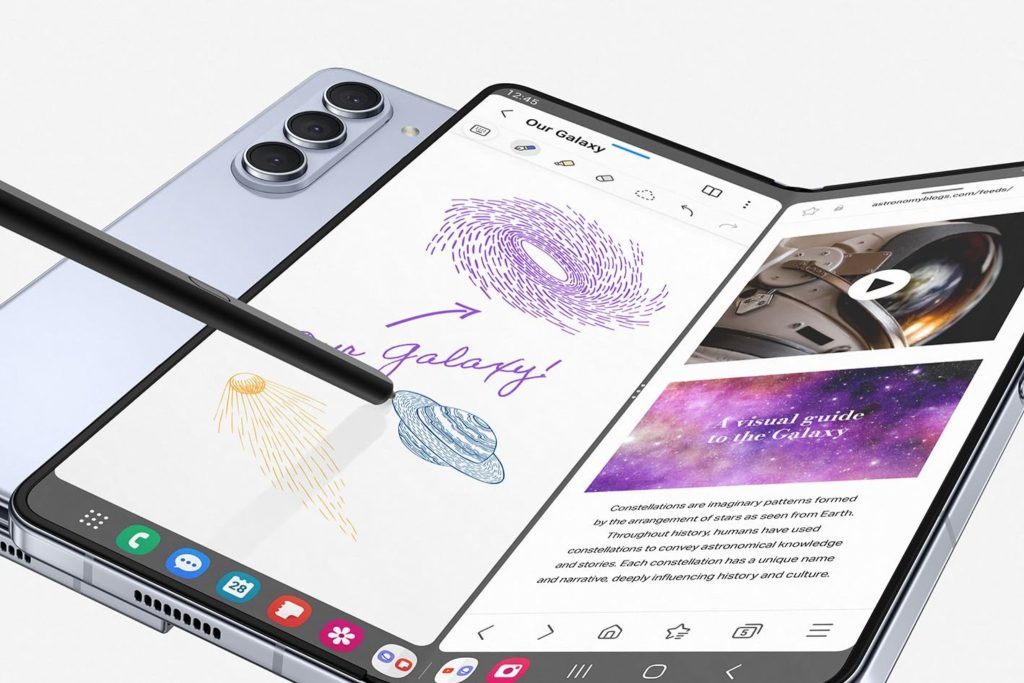
- Release Date: August 2022
- Weight: 271g
- Dimensions: 155.1 x 67.1 x 14.2-15.8mm (Folded), 155.1 x 130.1 x 6.3mm (Unfolded)
- OS: Android 12L
- Screen Size: 6.2 inches (Cover Display), 7.6 inches (Main Display)
- Resolution: 904 x 2316 (Cover Display), 1812 x 2176 (Main Display)
- CPU: Snapdragon 8 Plus Gen 1
- RAM: 12GB
- Storage: 256GB / 512GB / 1TB
- Battery: 4,400mAh
- Rear Camera: 50MP + 12MP + 10MP
- Front Camera: 10MP (Cover Display), 4MP (Main Display)
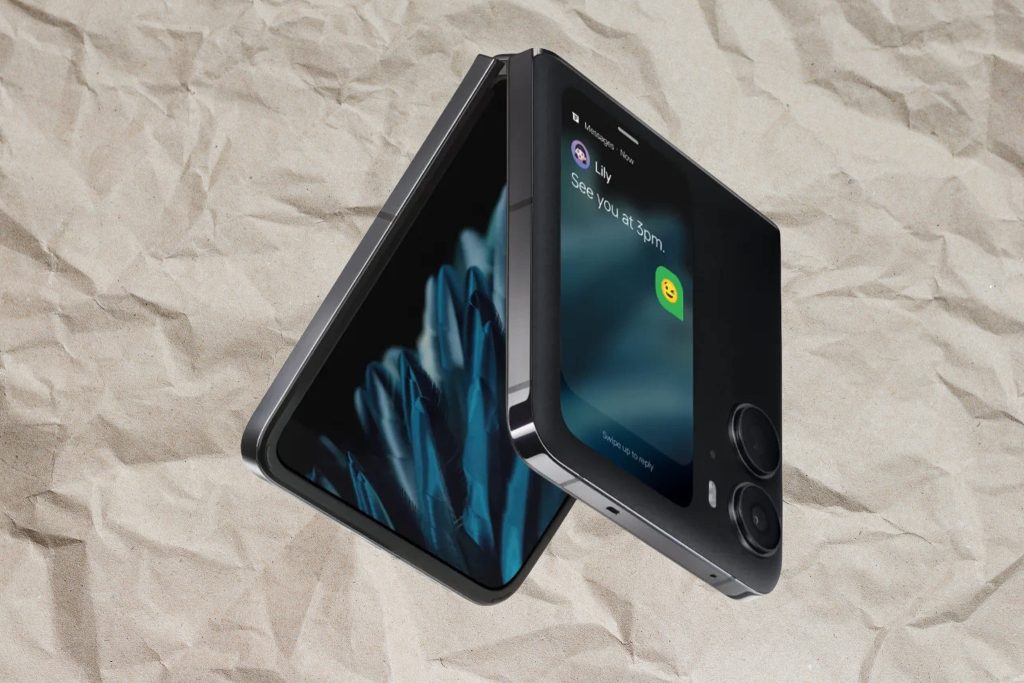
- Release Date: February 2023
- Weight: 191g
- Dimensions: 85.5 x 75.2 x 16.02mm (Folded), 166.2 x 75.2 x 7.45mm (Unfolded)
- OS: Android 13
- Screen Size: 3.26 inches (Cover Display), 6.8 inches (Main Display)
- Resolution: 720 x 382 (Cover Display), 2520 x 1080 (Main Display)
- CPU: MediaTek Dimensity 9000 Plus
- RAM: 8GB
- Storage: 256GB
- Battery: 4,300mAh
- Rear Camera: 50MP (main) + 8MP (ultrawide)
- Front Camera: 32MP

- Release Date: August 2022
- Weight: 187g
- Dimensions: 165.2 x 71.9 x 6.9mm (Folded), 84.9 x 71.9 x 15.9-17.1mm (Unfolded)
- OS: Android 12
- Screen Size: 1.9 inches (Cover Display), 6.7 inches (Main Display)
- Resolution: 260 x 512 (Cover Display), 1080 x 2640 (Main Display)
- CPU: Snapdragon 8 Plus Gen 1
- RAM: 8GB
- Storage: 128GB / 256GB / 512GB
- Battery: 3,700mAh
- Rear Camera: 12MP + 12MP
- Front Camera: 10MP
- Google Pixel Fold:
- Release Date: June 2023
- Weight: 283g
- Dimensions: 139.7 x 79.5 x 12.1mm (Folded), 139.7 x 158.7 x 5.8mm (Unfolded)
- OS: Android 13
- Screen Size: 7.6 inches (Main Display), 5.8 inches (Front Display)
- Resolution: 2208 x 1840 (Main Display), 2092 x 1080 (Front Display)
- CPU: Google Tensor G2
- RAM: 12GB (LPDDR 5)
- Storage: 256GB / 512GB
- Battery: 4,727mAh
- Rear Camera: 48MP (main) + 10.8MP (ultrawide) + 10.8MP (5X telephoto)
- Front Camera: 8MP
In conclusion, foldable phones have made a remarkable comeback in 2023, with leading brands like Samsung, Google, and Motorola offering cutting-edge models like the Galaxy Z Fold 5, Pixel Fold, and Razr Plus 2023. These devices have evolved from being considered gimmicks to offering a unique and immersive user experience. While foldable phones may not be essential for everyone, they appeal to tech enthusiasts seeking a high-tech and stylish gadget. As competition intensifies and advancements continue, the foldable phone market is likely to reshape the landscape of the smartphone industry in the years to come.